ESP32-P4
Enough performance for the round UI while remaining a manageable embedded platform.
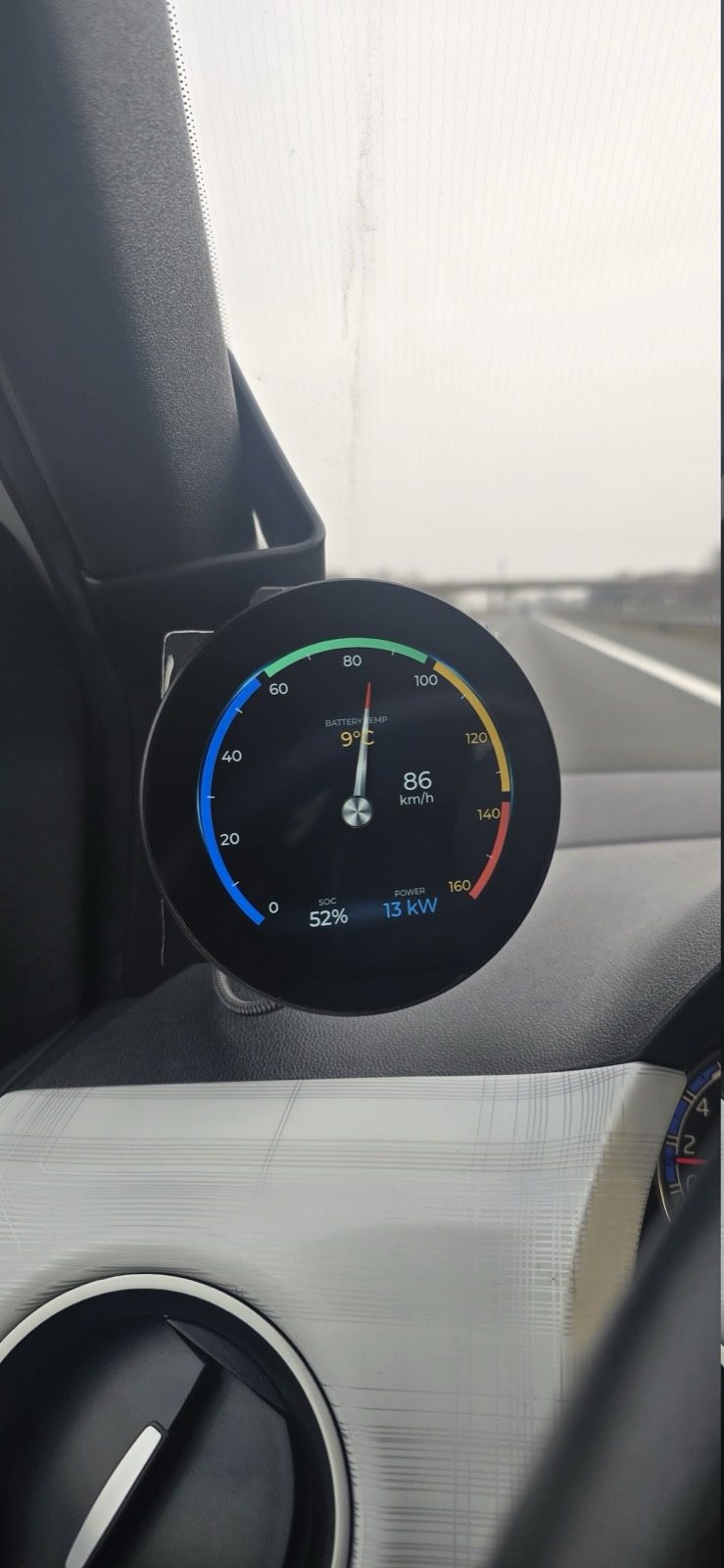
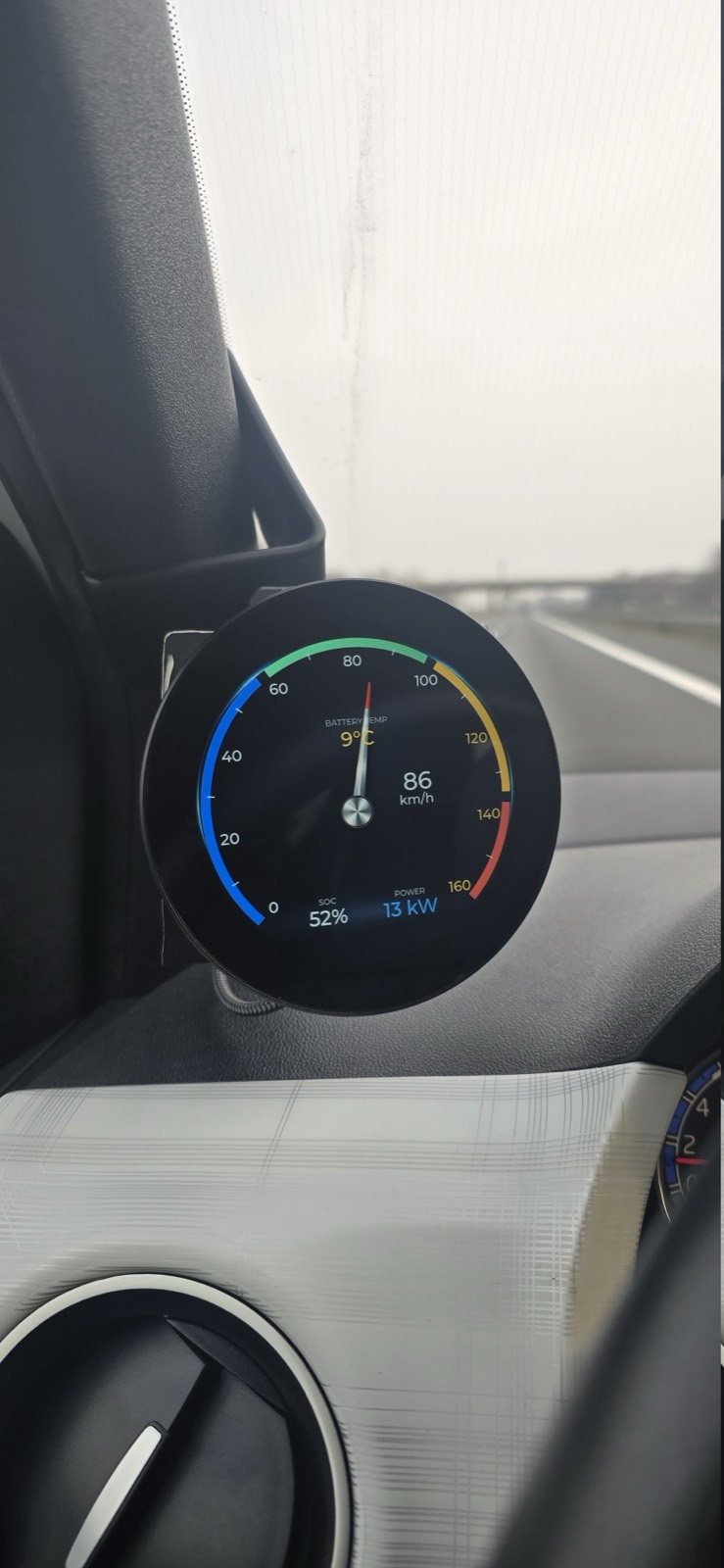
CarScreen is a round add-on display for my Seat Mii. It shows the OVMS data missing from the stock cockpit—while driving and while charging.
Why build it?
The idea came from the small auxiliary screens built by Garage Tinkering (external website). What caught me was not only the look but the possibility of tailoring a display completely to one vehicle.
On longer drives, the Mii mainly lacks a permanently visible state-of-charge value, battery temperature, and current power. OVMS already exposes that data locally. CarScreen does not create another data platform—it simply creates a better view.
Everyday display
The display connects to the OVMS Wi-Fi automatically on startup. While driving it shows speed, state of charge, battery temperature, and current power. During charging, current charge power and the charging curve take priority.
Technology
Enough performance for the round UI while remaining a manageable embedded platform.
Existing vehicle data over local Wi-Fi—without an additional cloud or another CAN intervention.
Themes, typography, and instruments remain in the codebase.
A Brodit ProClip and aluminium plate mount the display without a suction cup.
Open Source · MIT
The GitHub repository contains the code along with notes on the hardware, build, and installation. Anyone building a similar display can start there and adapt the solution to their own vehicle.
GitHub RepositorySend me a few details. I’ll assess feasibility and prepare an individual, non-binding quote.
[email protected]